Estate Planning with A Revocable Living Trust
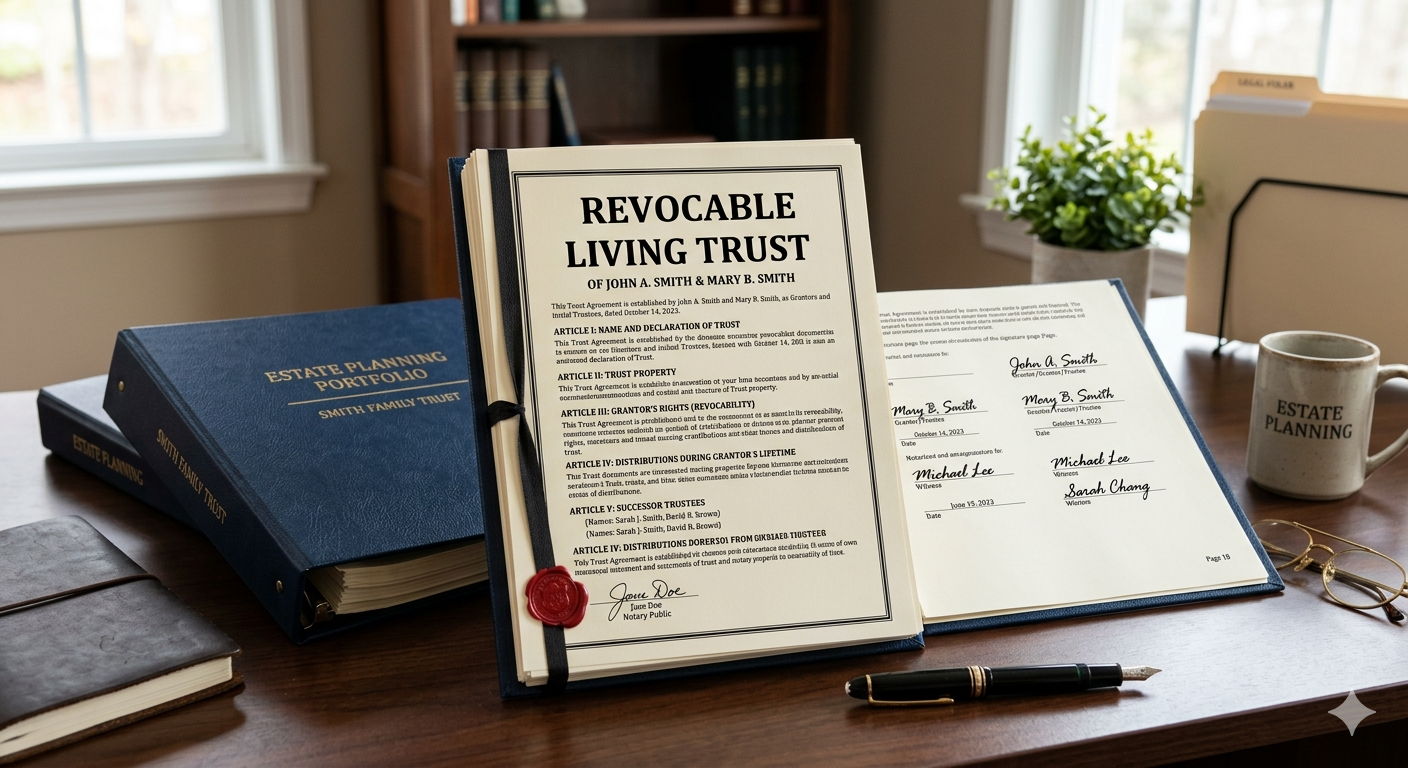
A Revocable Living Trust is a legal document that can accomplish a number of things for people who are interested in Estate Planning. Under the terms of the document, a person (usually called a "Settlor" or "Grantor") with transfer property to a person ("Trustee") to hold the property for the benefit of the Settlor. In most cases, the Settlor and the Trustee are the same person-- allowing the Settlor to have maximum control in the use and management of those assets.
The idea is that the Settlor will have unlimited use and enjoyment of the property during his lifetime, and upon the Settlor's death, the Trust continues, with a "Successor Trustee" appointed.
Since all of the Settlor's assets are property of the Trust, the Settlor will have no assets to probate when he passes away. The Trustee will settle the Settlor's debts and taxes, and distribute the remaining assets according to the terms of the Trust.
Thus, a Revocable Living Trust is a great way to avoid probate.
Benefits of a Revocable Living Trust:
1. Avoid Probate: The term "Probate" is used to encompass the entire process of qualifying and recording a decedent's will (if any), appointing a personal representative (executor or administrator) and administering the decedent's estate in court. In Kentucky, it is a formal, legal process that takes at least 6 months to complete. For a discussion of Probate, see this article: Why avoid Probate?
The Probate process can be complicated, time consuming, and expensive. Assets of the estate could be tied up for at least 6 months.
In Probate court many of the details of your estate plan become a matter of public record. This means that any member of the public can view your will, the inventory of your estate, and to whom, and in what amounts, your property was distributed.
A Revocable Living Trust can keep your property out of probate. It can eliminate the delay and expense of the legal proceedings, and safeguard your privacy.
2. Flexibility and Control: The Settlor maintains full control of the assets during his life-- to the extent that there is no real difference between outright ownership and the beneficial interest in the Trust. The Trust can be revoked at any time during the Settlor's life. The Settlor can modify any of the terms of the Trust during his life, including disposition of the assets, the appointment of successor Trustee(s), and disinheritance. The Revocable Living Trust is the most Flexible kind of Trust used for the purposes of estate planning.
3. Planning for your incapacity: in your Revocable Living Trust, you can name your successor Trustee. If you become unable to manage your affairs, this Successor Trustee can resume the administration of your Trust for your benefit without the necessity of having a court appoint a conservator to manage your finances. Paired with a General Power of Attorney, a Settlor can avoid distressing and disruptive guardianship/ conservatorship proceedings in court.
4. Controlled Distribution: With a Trust, you can control the time and manner of distributions to beneficiaries. For example, you can determine what age to distribute to your children, or you can structure payments at specified intervals. You can specify that funds will only be used for certain purposes (for example, healthcare, education, etc.)
A Revocable Living Trust is a handy tool for the Estate planner. Call 502-896-4529 to see if a Revocable Living Trust is right for you.
This is advertising material.